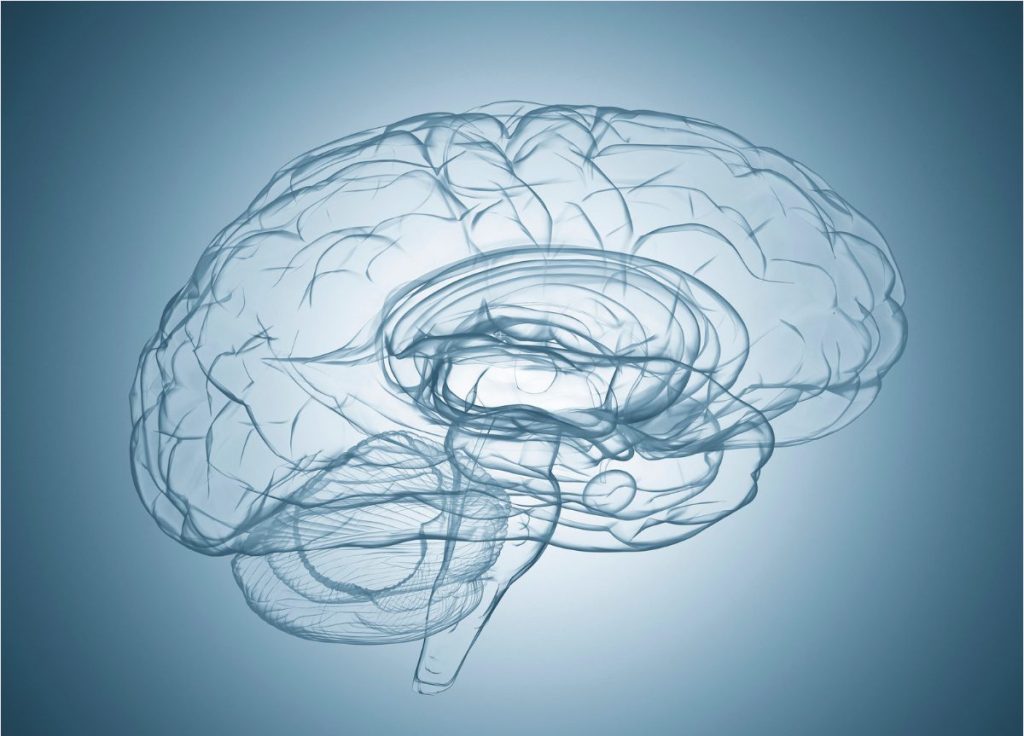
Many people living with persistent anxiety, brain fog, irritability, fatigue, or sensory overwhelm describe the same experience: “My body feels constantly on edge.” Even when there is no obvious danger, their nervous system does not fully switch off.
We now know this is due to three interacting systems: the amygdala, the wider limbic system, and the stress response – and in particular how these systems interface with immune signalling and inflammation.
The amygdala – the brain’s threat detector
The amygdala, the brain’s alarm centre, rapidly scans for danger and activates survival responses before conscious thought intervenes. In acute stress, this response is protective and adaptive.
Emerging research in psychoneuroimmunology however, suggests that inflammatory signalling due to physiological or psychological stressors, can increase amygdala reactivity and alter connectivity with regulatory regions of the prefrontal cortex. This signalling can be triggered by chronic infections, environmental toxins, traumatic brain injury, autoimmune processes, metabolic dysfunction, sleep disruption or sustained psychological stress.
Both physiological and psychological stressors activate overlapping neuroendocrine and inflammatory pathways. The body does not sharply distinguish between emotional trauma and biological threat; in both cases, stress hormones and immune mediators can become mobilised.
When this signalling becomes persistent, the alarm system becomes easier to trigger and harder to calm. In other words, the threat detector becomes sensitised and trigger-happy.
The limbic system – emotional memory and regulation
The amygdala forms part of the broader limbic system, which includes structures such as the hippocampus and interconnected salience networks. Together, these circuits shape emotional memory, stress appraisal and behavioural responses.
Under sustained stress – whether driven by psychological trauma, sleep disruption, chronic infections, toxic exposure, immune activation or metabolic strain – limbic circuitry may remain in a heightened state of vigilance.
This is where knowledge of the limbic loop becomes beneficial.
When the stress response reinforces itself
In a regulated system, stress activation is followed by recovery. Cortisol levels fall, inflammatory signalling subsides, and parasympathetic tone returns.
In a sensitised system, the sequence looks different:
- The amygdala detects threat (external or internal)
- The autonomic nervous system activates (fight, flight or freeze)
- Immune and inflammatory mediators increase
- Neural activity and cerebral perfusion shift
- Sensitivity to internal sensations rises
- The brain interprets this activation as a further threat
And the loop continues.
Research in post-viral and inflammatory conditions has observed that inflammatory cytokines can influence neural activity within mood and threat networks, while altered cerebral perfusion has been observed in post-viral and inflammatory conditions. These patterns help explain why some individuals feel persistently ‘switched on’. The nervous system is not choosing to stay activated, it is responding to ongoing signals of danger.
At a deeper biological level, this persistent activation may also reflect what Dr. Robert Naviaux has termed the, ‘Cell Danger Response’ – a protective metabolic state in which cells prioritise defence over growth and repair. In acute stress, this response is adaptive. When prolonged, however, sustained cellular danger signalling may reinforce immune activation and stress circuitry. A nervous system that feels ‘stuck’ may therefore reflect both circuit-level sensitisation and cellular-level defence responses remaining in the ‘on’ position, and the body loses the ability to return to a calm, restorative baseline, which can sustain or worsen chronic symptoms.
The immune and gut amplifiers
The stress response is of course not purely neurological. The gut–immune axis plays a central role. Growing evidence around the gut–brain axis indicates the gastrointestinal tract houses a large proportion of the body’s immune tissue, and disruption of the microbiome or intestinal barrier can contribute to chronic immune signalling.
Inflammatory mediators can influence limbic circuitry, while vagal signalling links gut state to brain state. When immune activation persists, the stress response may be easier to trigger.
This does not mean every case of anxiety is inflammatory in origin. It does mean that biological stressors may amplify psychological ones – and vice versa. Psychological stress can itself induce inflammatory signalling. Whether the trigger is emotional or physiological, the body mounts a coordinated stress response that includes immune activation; it does not meaningfully differentiate between the two.
Why ‘stuck’ does not mean broken
Describing the nervous system as ‘stuck’ implies functional rigidity rather than permanent damage. The system is doing what it evolved to do – protect – but it has lost flexibility. In Polyvagal Theory, Stephen Porges (Integrative Medicine for Mental Health Conference 2026 Speaker) describes how chronic stress may reduce vagal efficiency – the capacity of the ventral vagal complex to effectively regulate autonomic states and return the system to safety. When this regulatory capacity is compromised, recovery from stress becomes slower and less complete.
Addressing this requires nuance. Foundational physiological stability – including sleep, oxygenation, metabolic and nutritional balance and immune regulation – supports nervous system resilience. Equally, trauma-informed psychological support and autonomic regulation strategies remain essential as part of lifestyle and therapeutic interventions designed to bring the nervous and immune systems back into balance.
The limbic loop framework does not eliminate psychological explanations. Instead, it integrates them with immune, neuroendocrine and vascular biology. The key insight is therefore that mental health symptoms often characterised as ‘psychological’ usually emerge from complex interactions between stress circuitry, inflammation and physiology. When these systems reinforce one another, the nervous system may remain in threat mode longer than intended, and mental health symptoms appear or persist.
Understanding this interaction allows clinicians and patients alike to move beyond the false divide between ‘mental’ and ‘physical’ illness. The amygdala, the immune system, the neuroendocrine system and the stress response – whether driven by psychological or physiological stressors – are not separate domains. They are parts of a single adaptive network, one that, under sustained load, can become highly sensitised.
Recalibrating the stress response
Sensitisation is not failure but an adaptation under load. Regulation is the path back to balance.
Depending on the individual, this may include practices that support autonomic flexibility – such as structured breathwork, mindfulness-based practices, graded exposure, or vagal toning exercises. It may also include other physiological interventions to improve systemic resilience, such as nutritional and supplemental support to ensure the right co-factors and building blocks for metabolic activity, detoxification and immune boosting therapies to address toxic or pathogenic overload, lifestyle interventions such as exercise, sleep and circadian rhythm regulation to improve vascularisation, digestive and neuroendocrine functions. These strategies are designed to help the nervous and immune systems regain adaptive range.
Thank you for reading.
Warmest wishes,
Kirkland Newman, Founder, MindHealth360
🌱 Your guide to root-cause mental health.
- See Stephen Porges’ session Embodied Regulation: A Polyvagal Model of Fascia and Autonomic Integration, at this year’s Integrative Medicine for Mental Health (IMMH) Conference – 4 days, 50+ speakers, up to 40 CE credits, exploring integrative medicine psychiatry and root-cause approaches to mental health
- The MindHealth360 Show – Subscribe for evidence-based conversations with leading clinicians and researchers, delivered to your inbox 🎧
- Join the community – Ongoing insights, events and conversations shaping the field. Plus, free content when you sign up to the newsletter ✉️
Further Reading
For readers who would like to explore the science behind the concepts discussed in this article:
Psychoneuroimmunology & Inflammation in Mood Disorders
Miller AH, et al. (2021). Inflammation and Its Discontents: The Role of Cytokines in the Pathophysiology of Major Depression.
https://pmc.ncbi.nlm.nih.gov/articles/PMC2680424/
Gut–Brain Axis & Neuroinflammation
Kearns R, et al. (2024). Gut–Brain Axis and Neuroinflammation: The Role of Gut Permeability in Neurological Disease.
https://pmc.ncbi.nlm.nih.gov/articles/PMC11461658/
Cerebral Perfusion & Post-Viral Syndromes
Mohammadi S, et al. (2024). Brain Perfusion Alterations in COVID-19 and Long COVID.
https://onlinelibrary.wiley.com/doi/full/10.1002/brx2.70007
Polyvagal Theory & Autonomic Regulation
Porges SW. Polyvagal Theory: A Science of Safety.
https://www.polyvagalinstitute.org/whatispolyvagaltheory
The Cell Danger Response
Naviaux RK. (2014). Metabolic Features of the Cell Danger Response.
https://www.sciencedirect.com/science/article/pii/S1567724913002390