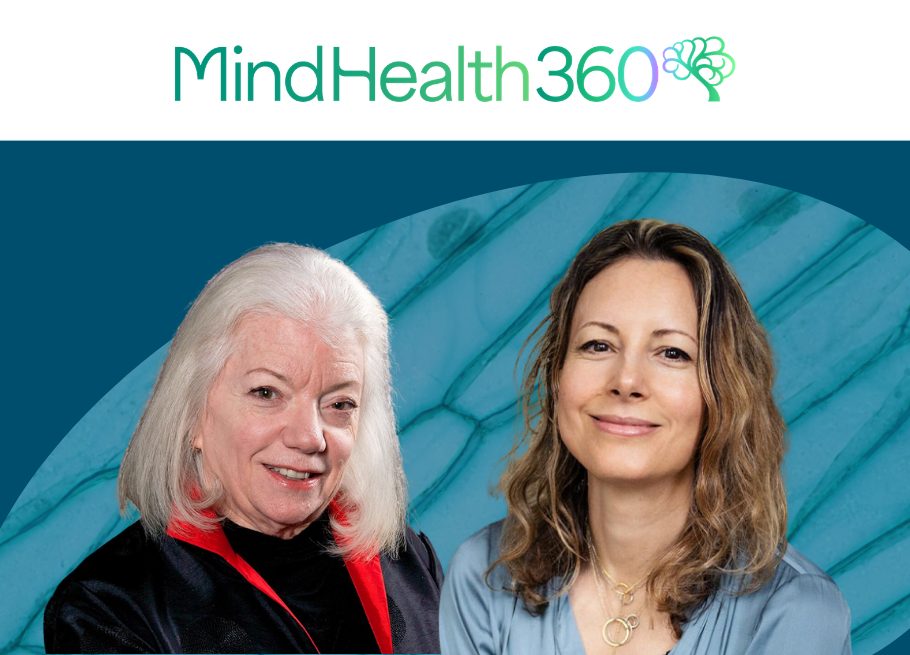
What is it that allows a human being to feel safe enough to connect, trust, and begin to heal? In my recent conversation with pioneering neuroscientist Dr. Sue Carter on The MindHealth360 Show, it became clear that oxytocin represents a much larger story than simply being the “love hormone.”
A Distinguished University Scientist and Rudy Professor Emerita of Biology at Indiana University, Dr. Carter has spent more than five decades exploring the biology of attachment, bonding, and caregiving. Her pioneering work on prairie voles transformed our understanding of monogamy and social connection, helping reveal how oxytocin and vasopressin are deeply intertwined with early attachment, trauma, stress physiology, development, and the biological foundations of human connection.
What emerges from Dr. Carter’s work is a far richer picture of oxytocin: not simply as a “feel-good” chemical, but as part of the biological systems that help human beings determine whether they are safe enough to bond, regulate, recover and repair.
“Biology is not separate from context. It is shaped by it.”
Oxytocin is not just about bonding
For many years, oxytocin was viewed primarily as a female reproductive hormone involved in birth and lactation. As Dr. Carter explained, that understanding was far too narrow.
Oxytocin is produced in the brain but also acts throughout the body, influencing stress physiology, autonomic regulation, immune function and social behaviour in both males and females. Dr. Carter also discussed emerging evidence suggesting interactions between oxytocin and the microbiome.
This helps explain why oxytocin is increasingly relevant to mental health research.
If depression, anxiety, insomnia and irritability are not only psychological experiences, but also involve dysregulation of stress systems and the nervous system, then the molecules involved in safety, attachment and physiological regulation deserve much more attention.
Oxytocin appears to play an important role in this wider network. It is involved not only in reproduction and bonding, but also in how the body responds to social bonding, stress regulation, caregiving, and the body’s capacity for rest and restoration.
Safety is context-dependent
A central theme throughout my conversation with Dr. Carter was that oxytocin cannot be understood outside context. Whether oxytocin promotes calm, bonding and regulation depends heavily on whether the nervous system perceives safety.
A hug from a trusted loved one is not the same as unwanted physical contact from a stranger. Even physical closeness or caregiving may not feel regulating if safety is absent. Oxytocin is not a magic hormone that can be separated from relationship, environment or perception.
This has important implications for trauma-informed care. The body does not respond only to events themselves, but also to the meaning and safety it assigns to them. A person who has experienced early relational trauma may struggle to interpret closeness as safe, even when connection is what they most need.
Attachment, in this sense, is not only emotional. It is physiological.
Oxytocin and vasopressin: regulating survival and stress
Dr. Carter explored the relationship between oxytocin and vasopressin, two closely related peptides involved in attachment, stress responses and survival.
Vasopressin is evolutionarily older and is more strongly associated with arousal, vigilance and defensive survival responses. Oxytocin, by contrast, is more closely linked to bonding, caregiving, stress regulation and social attachment.
Both systems are essential. Survival depends not only on responding to threat, but also on the ability to return to states of safety, connection and restoration after stress.
This offers a more nuanced understanding of resilience. Mental wellbeing is not simply about suppressing distress or “staying strong”, but about whether the nervous system can move flexibly between protection and connection, mobilisation and recovery.
Early attachment teaches the nervous system what safety feels like
Our conversation explored how early caregiving environments help shape the developing stress response. Pregnancy, birth, touch, feeding, attachment and social support all contribute to how the infant nervous system learns regulation and safety.
Dr. Carter discussed how early relational experiences may help calibrate biological systems involved in stress responses, attachment and emotional regulation later in life. This does not mean that early adversity determines a person’s future, but it does suggest that relationships and environment become biologically embedded in important ways.
Mental health, therefore, does not begin only with conscious thought or adult experience. It develops through ongoing interactions between biology, caregiving, stress and environment from the earliest stages of life.
Why this matters for integrative mental health
For integrative mental health, this has profound implications. Mental health cannot be understood purely through thoughts, symptoms or neurotransmitters in isolation. Stress physiology, attachment, immune signalling, early experience, relationships and environment all help shape whether the nervous system remains stuck in protection or is able to move towards connection and repair.
Dr. Carter’s work ultimately offers important insights for modern mental health care, highlighting not only the central role of oxytocin, but also how profoundly its effects are shaped by relationships, environment, perception, and a sense of safety. This more integrated understanding points to the importance of creating the physiological and relational conditions in which meaningful healing can begin.
Listen to my conversation with Dr. Sue Carter on The MindHealth360 Show to explore how oxytocin, attachment and stress physiology may shape mental health across the lifespan.
Thank you for reading.
Warmest wishes,
Kirkland Newman, Founder, MindHealth360
🌱 Your guide to root-cause mental health.
- See Sue Carter speak at this year’s Integrative Medicine for Mental Health (IMMH) Conference – 4 days, 50+ speakers, up to 40 CE credits, exploring integrative medicine psychiatry and root-cause approaches to mental health
- The MindHealth360 Show – Subscribe for evidence-based conversations with leading clinicians and researchers, delivered to your inbox 🎧
- Join the community – Ongoing insights, events and conversations shaping the field. Plus, free content when you sign up to the newsletter.