Dr. Geeta Maker-Clark: Forgotten medicines for better mental & physical health


Audio only version
Show Description
I started dancing 5 Rhythms about a year ago, and it changed my life. I met a whole new tribe of like minded people who have become fast friends, learned to inhabit my body in ways I never had before, healed some of my childhood wounding, discovered Joy in a way that had always eluded me, and enjoyed a year of personal freedom, exploration and growth which have profoundly changed me. Who knew that dance could be so powerful?
Dr. Geeta Maker-Clark, herself a physician and dancer, understands the power of dance, and the science behind its healing benefits. But she also understands the power of other cultural and lifestyle traditions which form part of the ancient medicine practiced by our ancestors. In this episode of the MindHealth360 Show, Dr. Geeta Maker-Clark raises an important question: have we become so focused on increasingly sophisticated treatments, testing and biomarkers that we are overlooking some of the most fundamental determinants of our mental and physical health? Drawing on her new book Medicine for All People: Science and Ancient Wisdom for Revolutionary Healing, Dr. Maker-Clark explores the medicines we may have forgotten to value: nature, food, plants, relationships, community, movement, dance, gratitude and play.
Dr. Maker-Clark’s approach brings together biomedical science, integrative medicine and ancestral wisdom without dismissing any of them. She argues that even functional medicine can become reductionist when it focuses exclusively on biomarkers and biochemical precision, while overlooking the environments and relationships in which people actually live.
We explore why health is not simply created in the exam room; how loneliness and social connection can affect stress physiology, inflammation, immunity and mortality risk; why our increasingly indoor and digital lives may be distancing us from important biological inputs; and why Getta describes community as ‘the vagal nerve stimulator of our times’.
We also look at the emerging science behind some of these forgotten medicines. Why might time in nature affect mood and circadian biology? What happens when dance brings together aerobic movement, rhythm, memory, emotion and social connection? And can practices such as gratitude help us train our attention without denying the reality of suffering? Finally, we explore “primordial prevention”: the idea that rather than waiting for disease or even its risk factors to emerge, we can create environments and ways of living in which those risks are less likely to develop in the first place.
In this episode, you will learn:
- Why medicine belongs to everyone and should not be reserved for those who can afford expensive testing, supplements or specialist care.
- Why modern medicine may be overlooking the health effects of nature, food, community, movement, relationships, gratitude and play.
- How our increasing disconnection from nature may be affecting mental and physical health, particularly for children growing up in increasingly indoor and digitalised environments.
- Why social connection is biological as well as emotional, influencing stress physiology, inflammation, immunity, sleep and mortality risk.
- Why dance brings together movement, music, memory, emotion, culture and human connection in ways that may have particular relevance for mental health.
- Why gratitude is a practice of attention rather than denial and what research suggests about its relationship with mental health and resilience.
- Why rebuilding trust, including trust in ourselves, can be a powerful part of healing.
- What primordial prevention means and why addressing the conditions that give rise to disease could fundamentally change the model of care.
About Dr. Geeta Maker-Clark
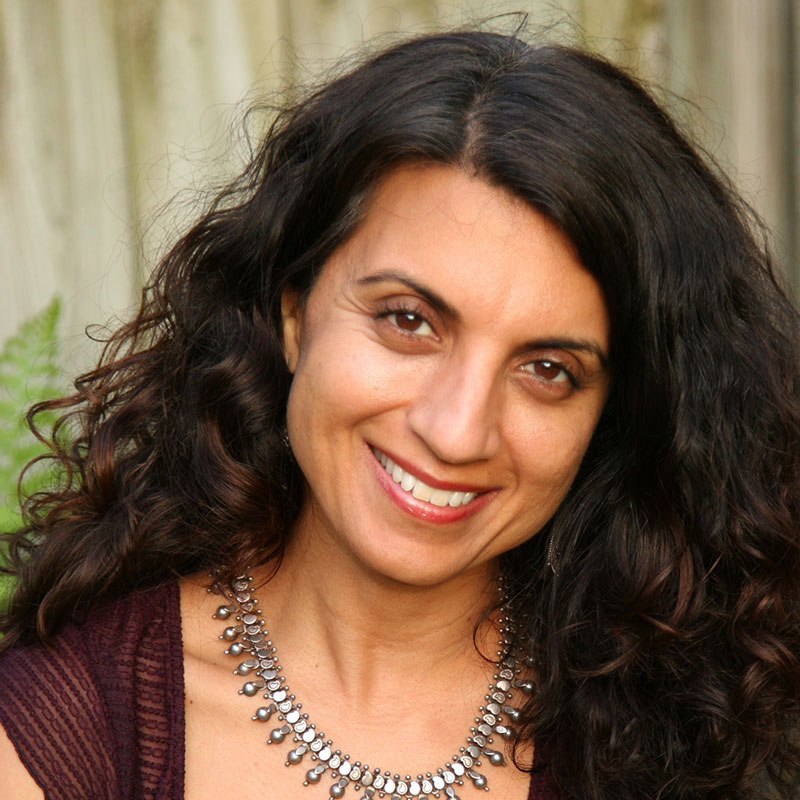
Geeta Maker-Clark, MD, ABOIM, is a nationally recognized integrative medicine physician, educator, and thought leader advancing a more just, nourishment-centered future of healthcare. She serves as director of integrative nutrition and advocacy at Endeavor Health, clinical assistant professor and co-director of the Culinary Medicine Program at the University of Chicago Pritzker School of Medicine, and faculty for the University of Arizona Integrative Medicine and Ayurveda Fellowship.
With more than two decades of clinical, academic, and global experience, Dr. Maker-Clark’s work bridges integrative medicine, nutritional and botanical therapeutics, mind-body medicine, and ancestral healing traditions. Her work invites clinicians to expand the medical lens beyond biochemistry alone—integrating culture, history, environment, and lived experience as essential drivers of health, resilience, and chronic disease outcomes.
Dr. Maker-Clark is the founder of Food Is Power, a nationally recognized health literacy and food justice initiative launched in Chicago Public Schools that centers decolonized nutrition education, food sovereignty, and culinary medicine. Her leadership in reshaping the narrative around food, power, and healing has been honored through a Castanea Fellowship and the Mesa Refuge Michael Pollan Fellowship in Food Journalism.
A compelling and deeply grounded speaker, Dr. Maker-Clark is known for translating connecting systems biology with the lived realities of patients and communities while challenging audiences to reimagine medicine as a tool for collective healing. Her forthcoming book offers a bold vision for restoring ancestral wisdom, metabolic health, and community resilience at the heart of modern care.
Show Notes
Take the conversation further at IMMH 2026
At the Integrative Medicine for Mental Health (IMMH) Conference 2026, Dr. Oscar Coetzee will take these ideas into greater clinical depth in his session, The Connection Between Functional Testing and Mental Health: A New Frontier of Prevention, Causal Investigation and Treatment, sponsored by Designs for Health.
Dr. Coetzee will explore how functional stool testing, organic acids, metabolomics, hormonal and genomic testing can be used to investigate neurocognitive dysfunction and mental health, including the relationships between nutrient deficiencies, the microbiome, gut inflammation, amino acids and genetic factors involved in neurotransmitter pathways.
His session makes the case for what he describes as the often-overlooked “third pillar” of mental health treatment, psychonutrigenomics, sitting alongside psychiatry and therapy/counselling.
Join Dr. Coetzee and more than 50 leading clinicians and researchers at IMMH 2026, October 8–11 at the Town and Country Resort, San Diego – or online.